
Match the material to how you use the kitchen
Start with use, not looks. Who cooks, how often, and how carefully? Do you set hot pans down without thinking? Is there red wine, citrus and tomato sauce on the counter most nights? A material that's ideal for a rarely used bar or butler's pantry may be the wrong choice for the main prep counter.
- Quartz: engineered, consistent in pattern and color, and doesn't need sealing. Kitchen Kings installs MSI quartz. It's a strong choice for heavy daily use.
- Granite: natural stone with real slab-to-slab variation. Usually sealed, and generally durable on a working counter.
- Marble: natural stone prized for its veining. Softer and more reactive to acids than granite, so many owners accept a patina over time or reserve it for an island or baking station.
- Other surfaces: there are many other natural and engineered options. Ask about heat, stain and scratch behavior, and about repair, before committing.
Mixing materials is common in larger McLean kitchens: a hard-wearing quartz on the perimeter where the cooking happens, and a statement natural stone on the island.
Choose the slab, not just the color name
With natural stone, the sample you saw in a showroom is a sample of a type, not your slab. Two slabs with the same name can look very different. For any premium natural stone, plan to see the actual slabs before they're cut, and to mark or approve the ones you want. Look at them in daylight if you can, and photograph them next to your cabinet door sample.
- Check the whole slab, including the edges, for fissures, pits and color shifts.
- Note where the most dramatic veining is, and whether you want it on the island or out of the way.
- Confirm how many slabs your layout needs, with some margin for matching.
- Ask whether the remaining slabs from the same block are available if one is damaged.
Seams and layout
Large islands and long runs may need more than one slab, which means seams. Ask where seams will fall before templating, and ask to see the layout drawn on the slab images. On a veined material, a seam can either continue the pattern or interrupt it. That's a design decision you should make, not one made for you at the shop.
Waterfall edges
A waterfall edge carries the countertop down the side of the island to the floor. It's a signature look in many high-end kitchens and uses more material. The corner where the top meets the side is a mitered joint, and on a veined slab the vein should flow around the corner. Plan the waterfall with the slab layout, and think about how it meets the floor and the seating overhang.
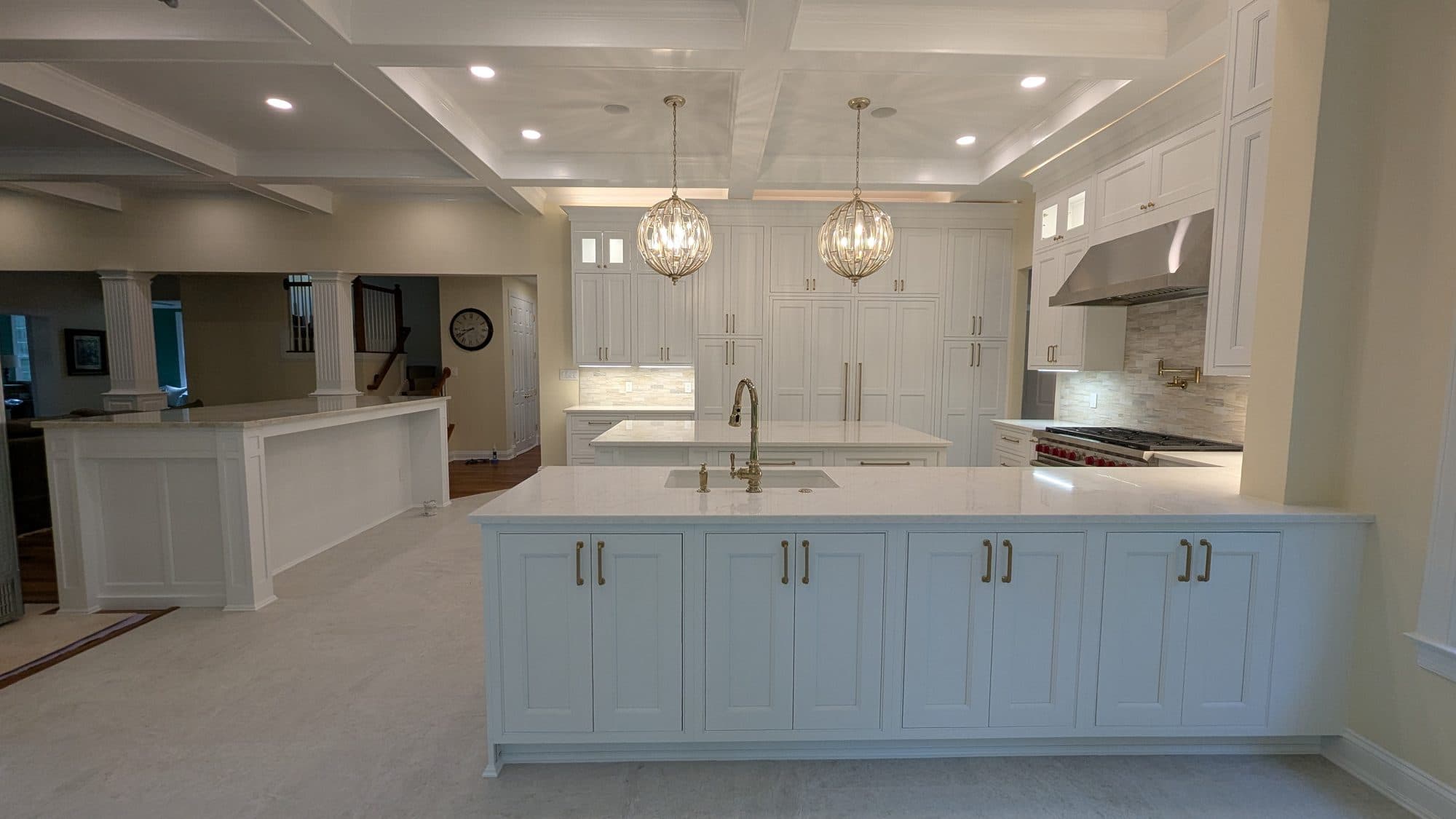
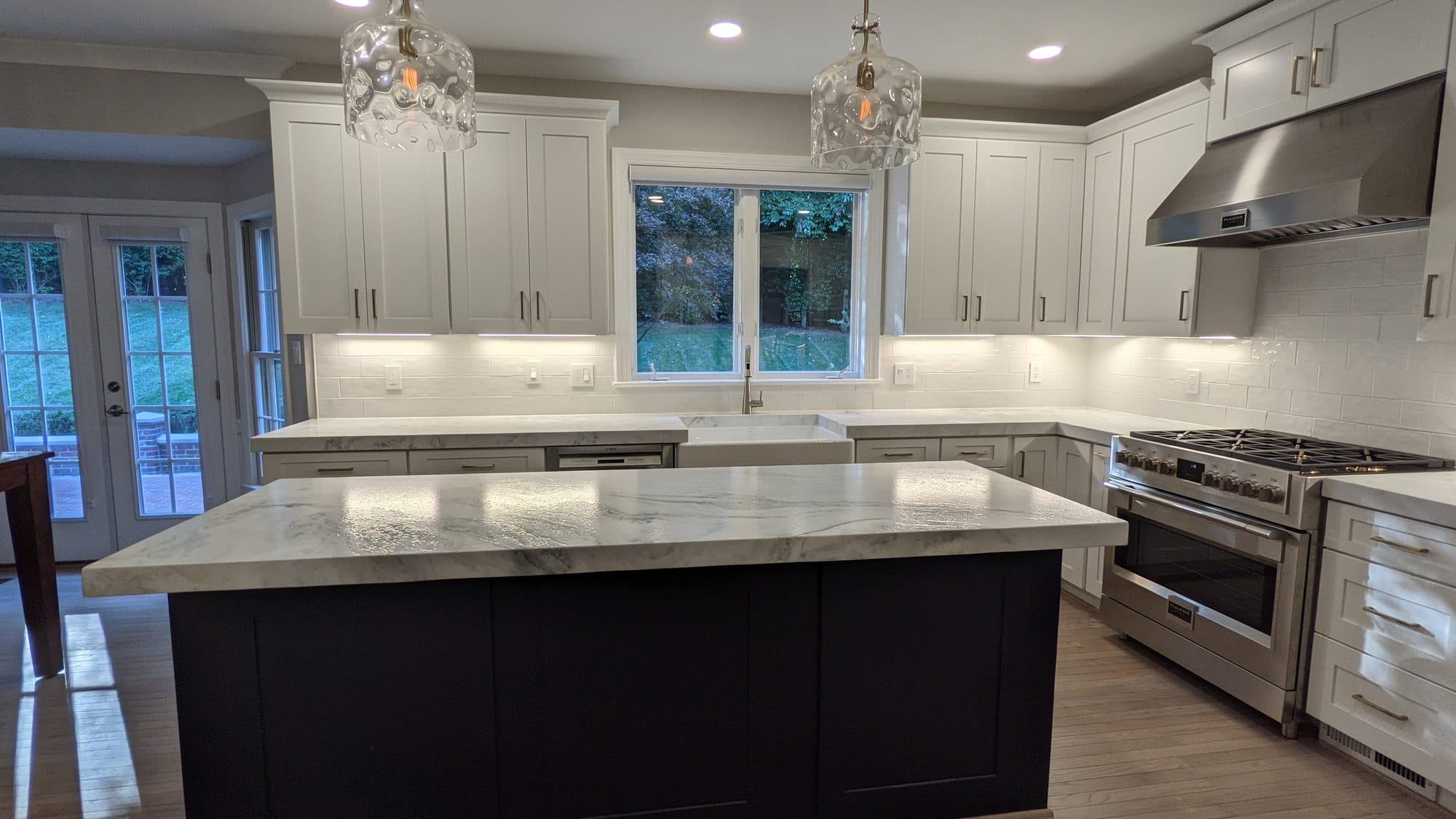
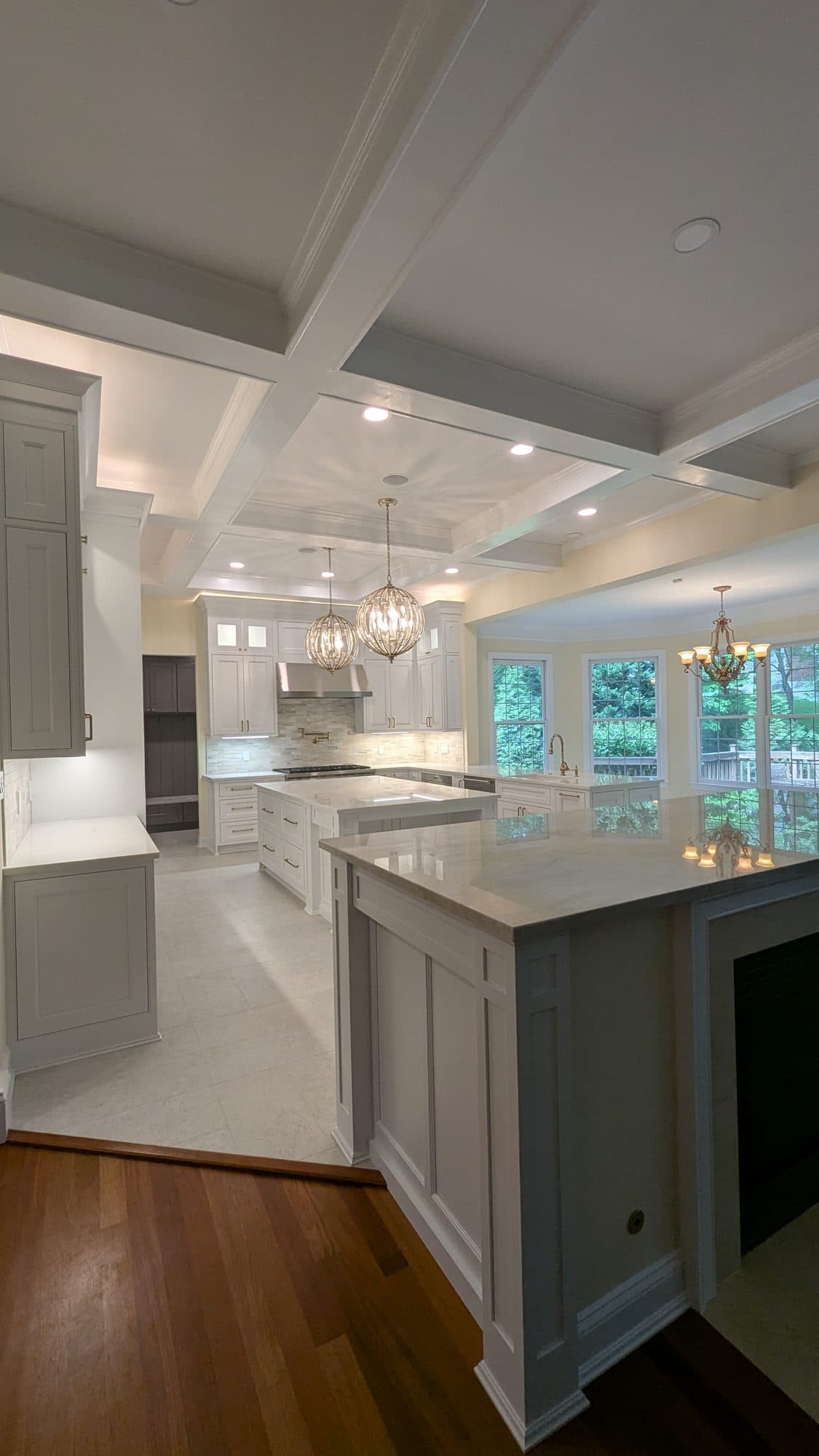
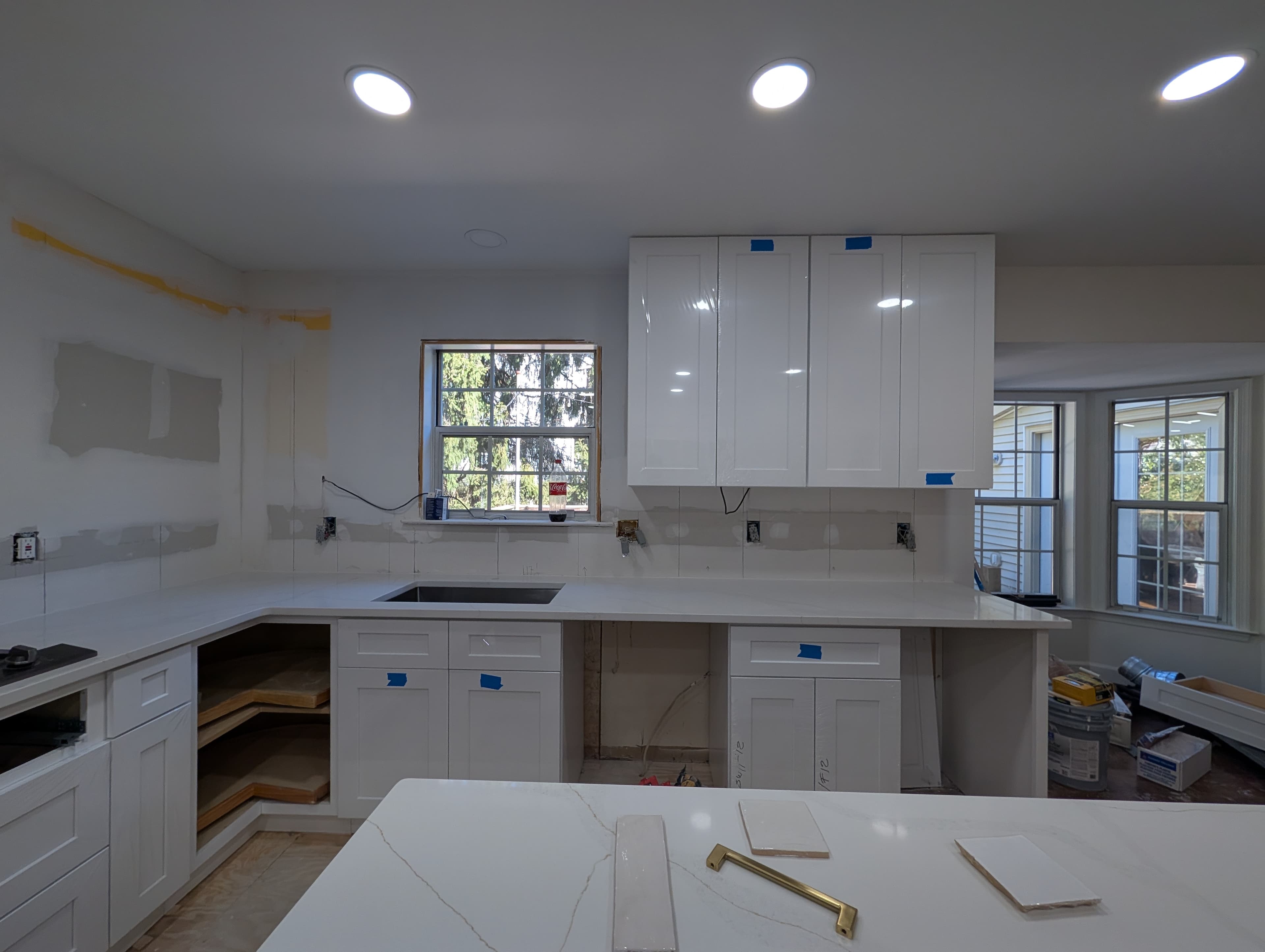
Photos are from Kitchen Kings projects, not McLean. The quartz slab shown in progress is from a remodel in Herndon.
Thickness, edges and finish
- Thickness affects the look and sometimes the support needed under overhangs.
- Edge profiles range from a simple eased edge to more decorative shapes; simple edges tend to suit modern kitchens and chip less.
- Polished finishes show the stone's color most strongly; honed finishes look softer but can show marks differently.
Templating: the details that have to be settled
The countertop is templated from the installed cabinets, so the cabinets must be in and level. Before the template appointment, have the exact sink, faucet, cooktop and any soap dispenser or air switch chosen, because their holes and cutouts are made in the slab. Decide on the backsplash too: a full-height slab backsplash changes the slab count and where outlets go.
What it typically costs
| Tier | Typical Scope | Range |
|---|---|---|
| Countertops | Quartz, granite, and other surfaces — sized, templated, and installed. | $3,000–$12,000 |
Typical Northern Virginia reference ranges from the Kitchen Kings cost guide, not quotes. Your price depends on the written scope for your McLean kitchen.
Premium natural stone, large islands, waterfall edges and full-height slab backsplashes all push a project toward the top of that range or beyond it as part of a larger remodel.
Related
Is quartz or natural stone better for a high-end kitchen?▸
Neither is better in every case. Quartz is consistent and low-maintenance; natural stone offers one-of-a-kind patterns and, depending on the stone, more care. Many kitchens use both.
Should I see my slab before it's cut?▸
For natural stone, yes. Two slabs with the same name can look very different, and seeing yours lets you decide where the veining goes.
Do countertops need a permit in Fairfax County?▸
Fairfax County's guidance lists kitchen cabinets and countertops as residential work that doesn't need a permit on its own. Moving plumbing or adding outlets is a different matter.