
Start with what you store, not what you like
Before looking at a single door sample, take an inventory. Pull everything out of one or two cabinets and note what lives there: sheet pans, stand mixer, spices, platters you use twice a year, the recycling. Then note what's missing: a place for small appliances off the counter, somewhere for the kids' lunch supplies, a home for the wine that currently lives in the dining room. A custom cabinet plan is only as good as this list. In McLean kitchens that open onto family rooms, it's also worth listing what you'd like hidden from view, because the kitchen is now on display.
- Everyday cooking: pots, pans, utensils, oils and spices near the range.
- Cleanup: trash, recycling, compost, dish storage near the dishwasher.
- Food storage: pantry depth and how you shop (weekly bulk vs. frequent small trips).
- Serving and entertaining: platters, glassware, a beverage station.
- Household overflow: mail, chargers, cleaning supplies.
Lock in appliances before cabinet drawings
High-end appliances drive cabinet dimensions. A built-in or panel-ready refrigerator needs a specific opening and sometimes specific side panels; a professional-style range needs a precise gap and often a filler for heat clearance; wall ovens, warming drawers and microwave drawers each need their own boxes. Choose exact models and get the manufacturer's installation specifications to your cabinet designer before the drawings are final. If a model is discontinued or changed later, make sure the change is reviewed before fabrication.
Cabinet construction: what to ask
Two cabinets that look identical from the front can be built very differently. You don't need to become an expert, but you should know what you're paying for. Ask about:
- Box material and thickness, especially for sink base cabinets that may see moisture.
- Framed or frameless construction, which affects how much interior space you get and how doors sit.
- Drawer box construction and the drawer slides' weight rating for heavy pots.
- Hinge type and whether soft-close is standard.
- How the finish is applied and what touch-up looks like years from now.
Door style and overlay
Door style sets the character of the room. Shaker doors are versatile and forgiving. Slab doors read modern and show every misalignment. Inset doors, set inside the face frame, look tailored and traditional but need precise installation and occasional adjustment as wood moves with the seasons. Raised-panel doors suit some traditional McLean homes but can feel heavy in an open plan. Look at samples in your own kitchen's light, next to your countertop and floor samples.
Where custom pays off most
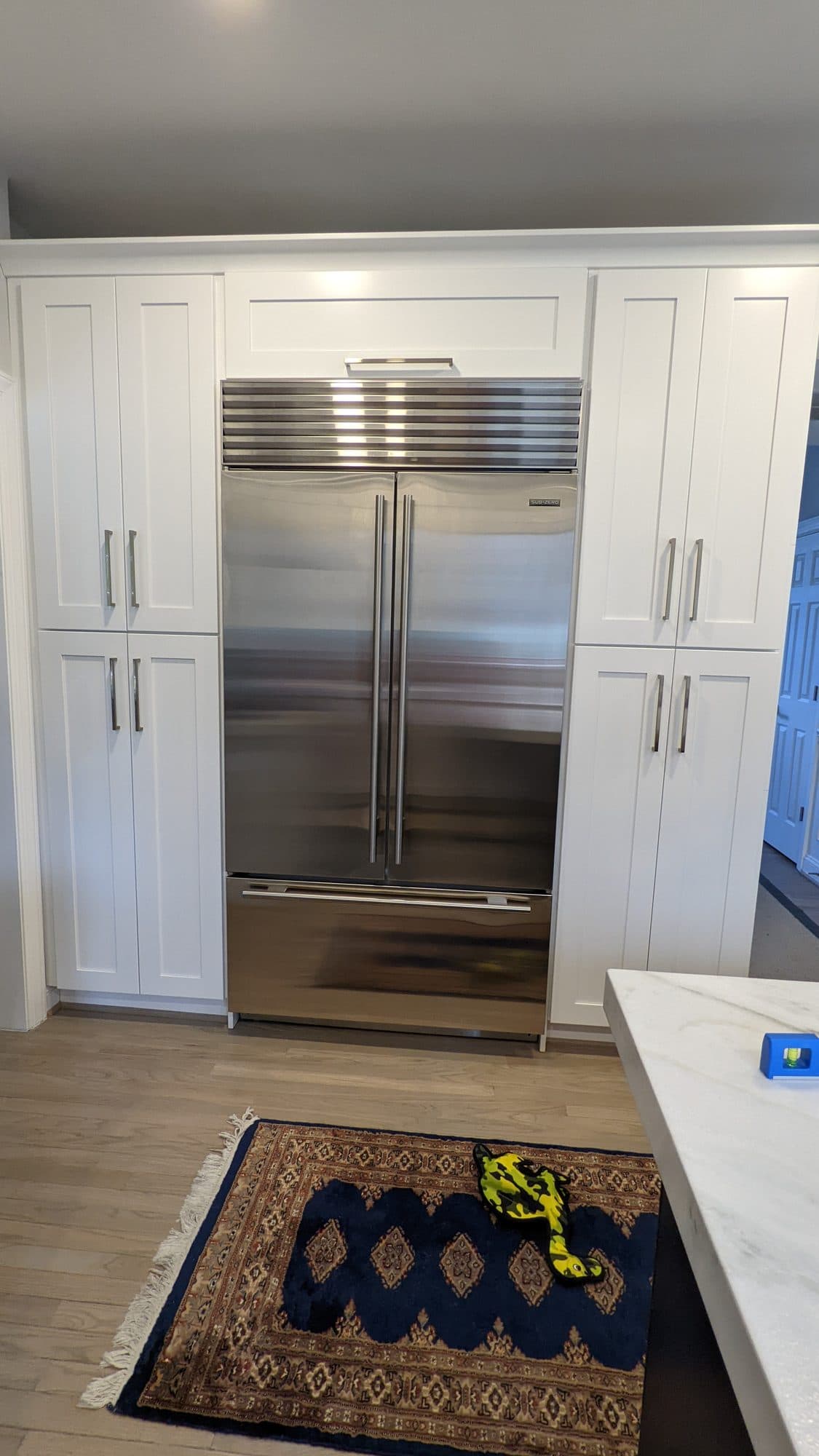
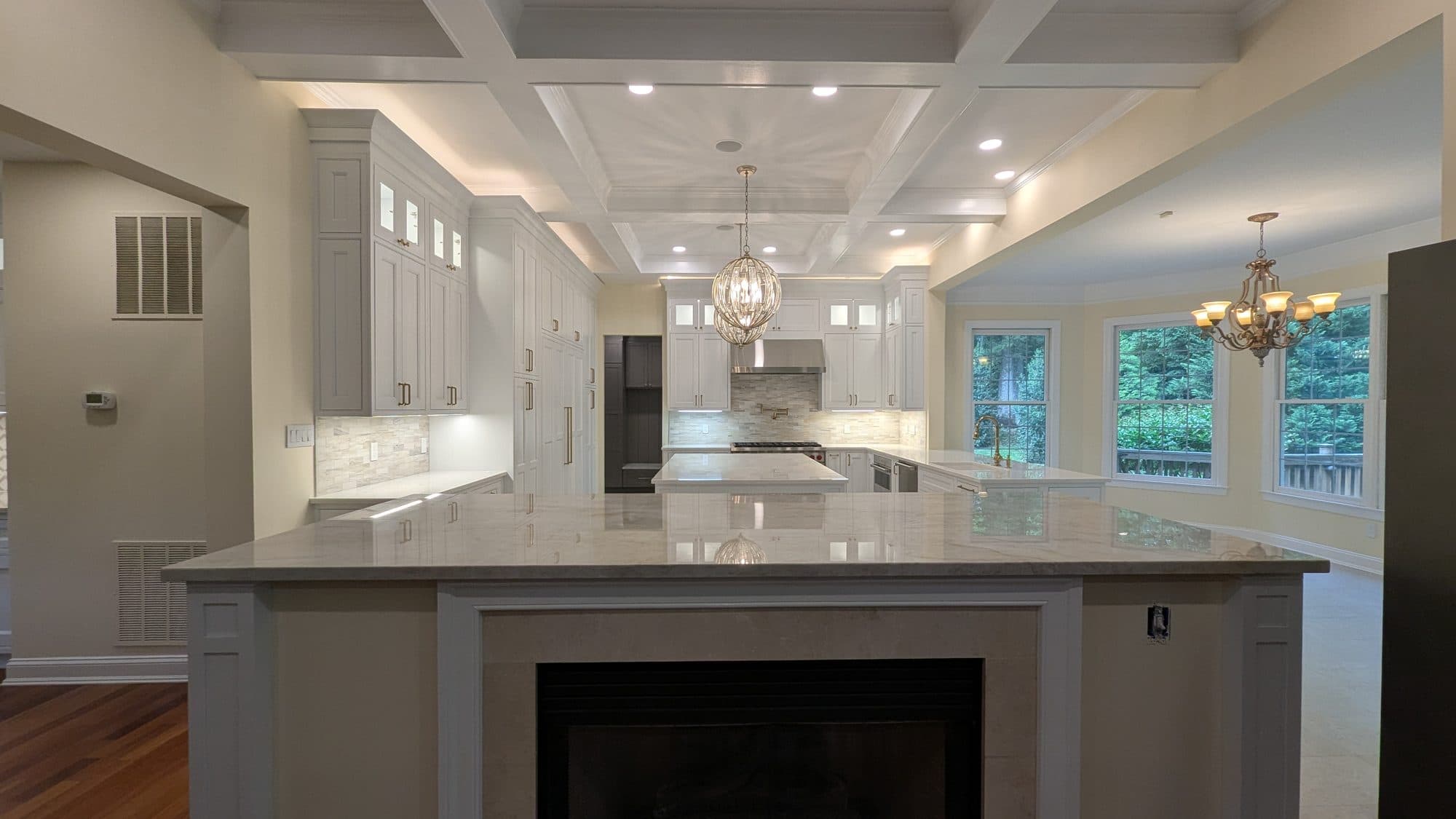
- Tall pantry walls that run floor to ceiling instead of stopping short.
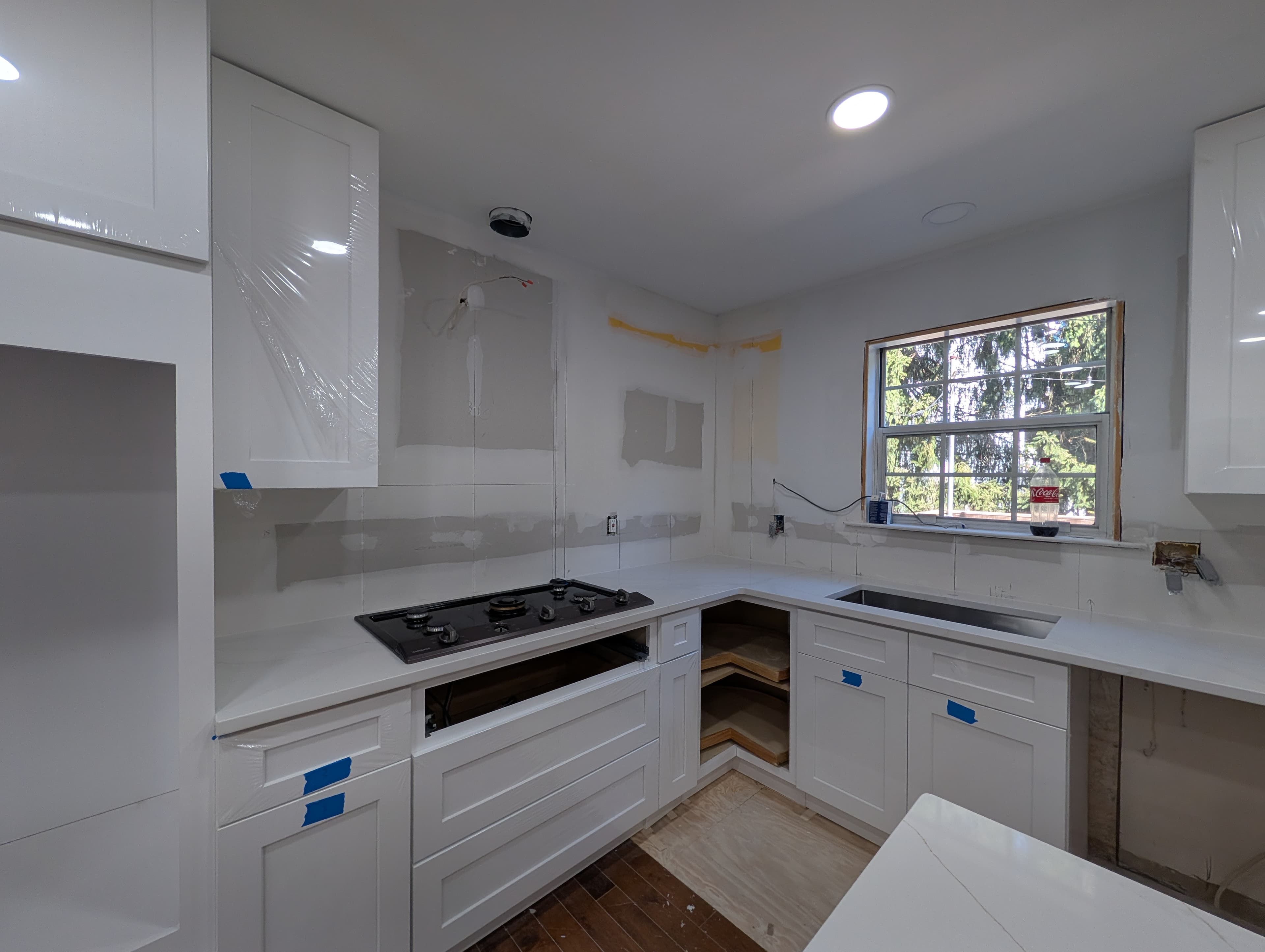
- Corner solutions that make blind corners usable.
- Drawers instead of doors in base cabinets, so you never kneel to find a pot.
- Appliance garages that keep a coffee maker or mixer ready but out of sight.
- Integrated panels that let the refrigerator and dishwasher disappear into the run.
- Built-ins beyond the kitchen, like a mudroom-style bench where the kitchen meets the garage door.
The built-in storage bench in the photos above is from a Kitchen Kings remodel in Herndon, not McLean, and shows how cabinetry can extend into the spaces around a kitchen.
Finish and hardware
Painted cabinets give a clean, even color and can be touched up, but edges can chip with heavy use. Stained wood shows grain and hides minor wear. Two-tone kitchens, with a contrasting island for example, are a way to add character without overwhelming the room. Hardware is easy to overlook in a budget: a kitchen can have dozens of pulls and knobs, so a small per-piece difference adds up. Hold samples in your hand and try them on a drawer.
Refacing, custom, or a mix
If you're keeping the layout and the boxes are sound, refacing may give you the look you want for less. If the layout is changing, custom cabinets are usually the better investment. A mix, refaced perimeter with a new custom island for example, can work but needs care so old and new read as one kitchen.
What it typically costs
| Tier | Typical Scope | Range |
|---|---|---|
| Custom Cabinetry | Built to the exact dimensions and storage needs of your kitchen. | $10,000–$30,000 |
| Cabinet Refacing vs. Replacement | We help you decide what's worth replacing and what's worth refacing. | $8,000–$25,000 |
Typical Northern Virginia reference ranges from the Kitchen Kings cost guide, not quotes. Your price depends on the written scope for your McLean kitchen.
Questions to bring to any cabinet proposal
- Are these cabinets built to my room's measurements, or standard sizes with fillers?
- Which appliance models are the drawings based on?
- What box, drawer and hinge construction is included?
- Who measures the room after demolition, and when?
- Is hardware included, or an allowance?
- How will new cabinets meet any existing cabinetry or trim?
Related
Are custom kitchen cabinets worth it in a McLean home?▸
When the room has odd dimensions, the layout is changing, or you want storage built around how you live, custom usually earns its cost. If the existing boxes are sound and the layout works, refacing may be the better value.
What's the difference between custom and semi-custom cabinets?▸
Semi-custom cabinets start from standard sizes with some modifications. Custom cabinetry is built to your room's exact dimensions, so it fits awkward walls and corners without large fillers.
When do I need to decide on hardware?▸
Before the cabinet order is final, because some hardware needs specific drilling or drawer front sizes. You can sometimes change pulls later if the hole spacing matches.